
Mind the gap
Riding my train of thoughts

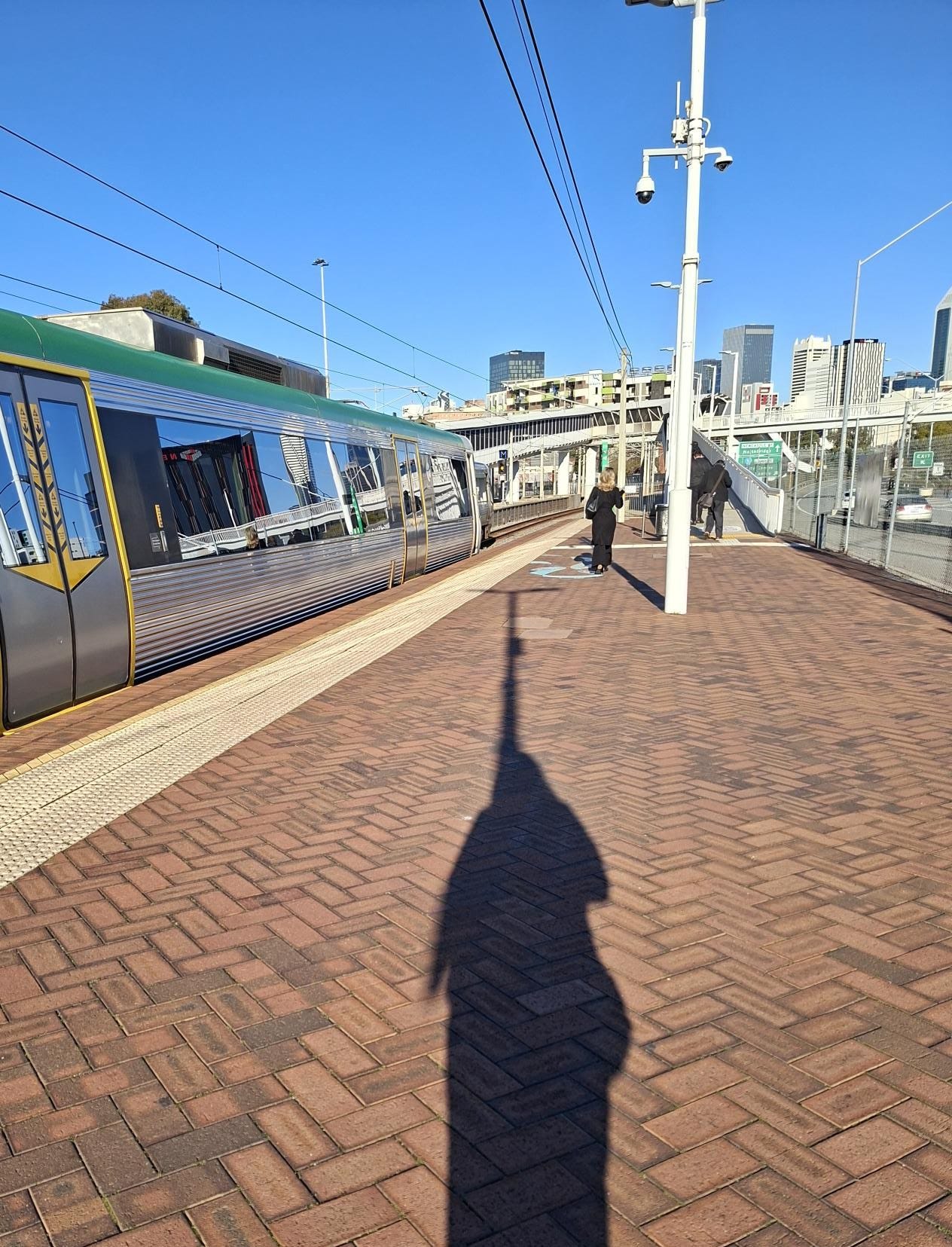
I’ve caught the train to Perth quite a bit over the years. Not a seasoned traveller, but definitely someone who’s comfortable using the service and knows where to hop on and off.
As I write, I’m without my car, as it’s in with the mechanic for a service and some new tyres. I was going to mooch around and wait at a shopping centre near the workshop, but then I remembered I really don’t like shopping centres that much. All that recycled air, glaring lights, no windows (or very few), and shops jam packed with nonsense I can’t afford anyway.
So I caught two trains and a bus home, and will catch them all again in a couple of hours to pick up my car.
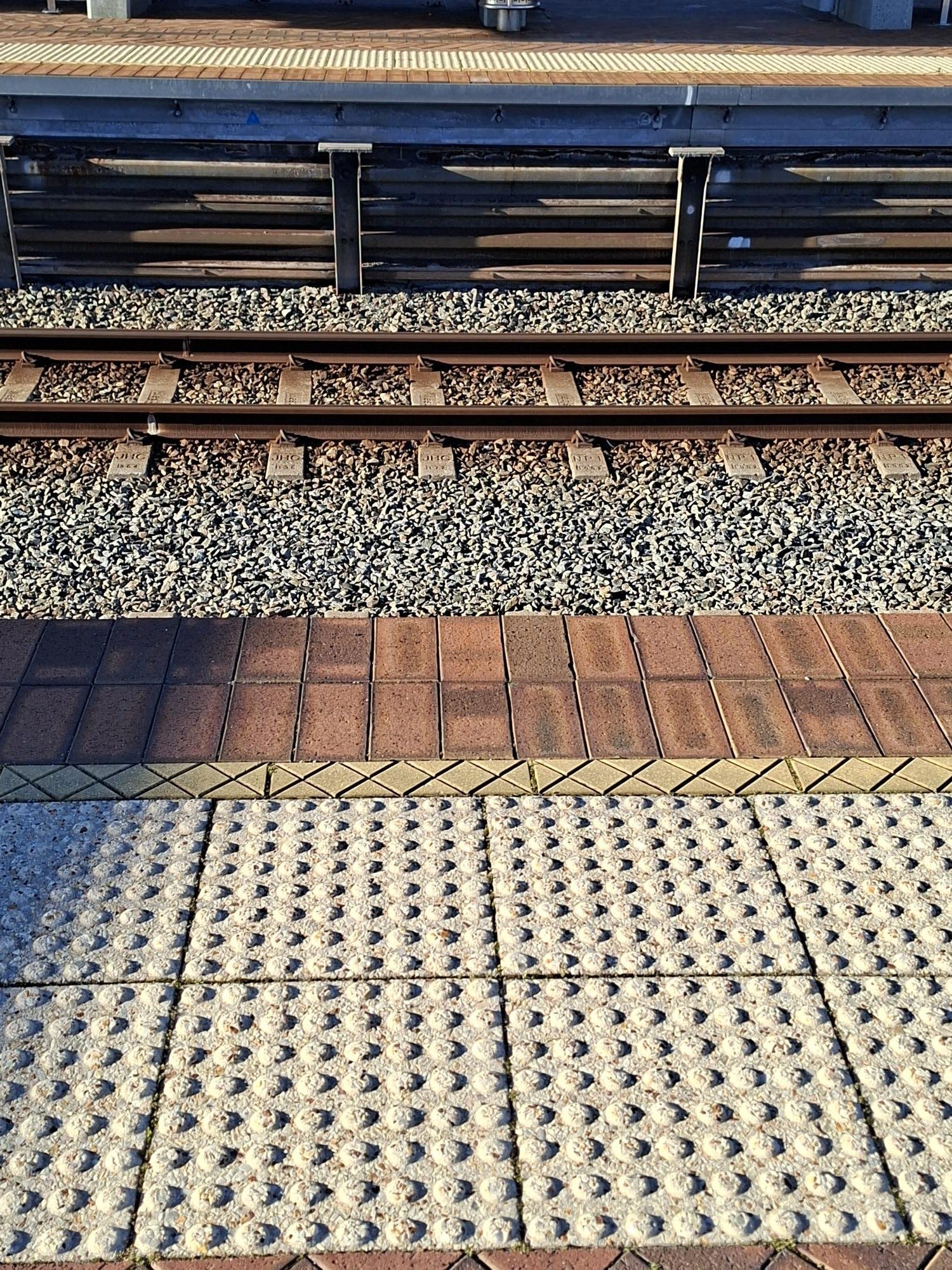
I remembered catching the tube in London, and the very polite voice telling us all to Mind The Gap. At one point on the Perth line I frequent, there’s a station with the same spacing problem between the platform and the train, so a very well-spoken gentleman tells us to Mind The Gap.
That phrase echoed around in my head as I trundled home.
Mind The Gap.
Mind The Gap.
The Gap, as it dawned on me, is perhaps the ‘great divide’ in between the people who travel by car and the people who travel by train.
For those of you not familiar with Perth, it’s the world’s longest city. From top (Two Rocks) to tail (Dawesville, Mandurah) it’s 150kms long. Urban sprawl is quite a problem in Perth because no one want to go inland (east), so everyone spreads out along the coast (north and south). Because of this, the public transport system is literally stretched to the limit. There’s the constant problem of a) providing a service for commuters to get from where they are to where they need to be and b) building the infrastructure to facilitate that.
In my opinion the WA Government is doing their best here. In recent years three new train lines have opened up, including one to the airport. I think the majority of people still drive to work, judging by the daily traffic jams on the major arterial roads leading around the city.
There are peak times on Perth public transport, don’t get me wrong. Lots of people use the service to get to work every day, and lots of kids use the service to get to school. Recently when I’ve travelled on the trains and buses, it’s been during off-peak times, and the types of people who use the service at those times are a whole lot different to the ones who travel for work.
Cheap (or free) transport of any kind is going to entice those lost souls amongst us for whom human interaction is painful and frightening. Therefore we can expect to encounter commuters who we might feel a little on-edge about sharing the train carriage with.
Across from me this morning sat a man who leaned forward and whispered whenever people got on the train. Who he was whispering to and what words he was whispering was for his knowledge alone. On a packed train years ago I remember sitting across from a gentleman who was quite obviously homeless and hadn’t washed for a long period of time. As the train stopped at the stations and the carriage slowly cleared of commuters, he plucked a can of cheap body spray from his dilapidated rucksack and sprayed himself liberally. People board the train on mobility scooters, wheelchairs, crutches, bare feet, broken shoes, and the latest footwear from Armani.
It’s sad how we as a society have trained ourselves to shun people who look different to us. People with different coloured skin. People covered in tattoos. People who dress like they’ve just spent the last three years sleeping in their clothes because, hey, maybe they have.
From what I’m reading, the president of the US is deporting a lot of people who look different to what he thinks an American should look like. And to be fair, some of those being deported are genuine criminals who are fouling the country and making it difficult for the genuine legal immigrant.
On the news feed this morning I was saddened to read there’s been yet another ICE shooting of a reportedly innocent, legal immigrant. He wasn’t the desirable American, and whether he accidentally moved his car towards the ICE agent or it was deliberate, his daughter now no longer has a dad.
Here in Australia a woman named Pauline Hanson and her political party One Nation, are gathering momentum for the same kind of ‘non Australian’ deportations. According to her website, one of the laws they wish to add is to:
Refuse entry to migrants from nations known to foster extremist ideologies that are incompatible with Australian values and way of life.
Firstly, what are ‘Australian values’ and who gets to decide what they are? Are Australian Values caring for your neighbour? Being polite? Obeying our laws? Loving your family? Respecting the flag? Or are her Australian Values vaguely aligned with only speaking English, eating Vegemite and lamb chops, and shunning ‘multiculturalism’?
Secondly, nations known to foster extremist ideologies? So like, everywhere? Currently the USA is fostering some extremely non-Australian ideologies, like dobbing in a neighbour, cutting aid to ex-servicemen and women, and making free healthcare something to be equated with unicorns and little green spacemen. So are we not letting in anyone from the US?
The trouble with this kind of rhetoric is that it stems from a very real place of fear and a desire to be safe. No one wants to be stabbed on their way to the shops. No one wants their kids shot while they’re having their afternoon nap in kindergarten. No one wants to be cat-called or groped while they’re out on their own. No one wants to be afraid. And in order for us to not be afraid, we have to have someone to Blame.
Once we have someone to Blame, a face to attach to our fears, perhaps even a race of people to whom we can attribute all of society’s downfall, suddenly it’s easier. Blame them. They brought this stuff. They’re different to us. They believe different things. Send them back to where they came from. Lock ‘em up.
Again, I know there are a lot of extremists who get into generally law-abiding countries and create absolute havoc. Societies where women are treated as lesser creatures. People-groups who have no respect for the law of the country they now live in.
And then there are the folks who, for no fault of their own, fall through the cracks in society. Mental health, disabilities, financial pressures and job insecurities.
It makes for a very wobbly, scary, and uncertain environment.
You know who would be right there in the middle of all of this? Who would be there sitting alongside that homeless guy with the can of body spray, who’d be trying to calm the young immigrants with anger to burn, who’d be walking alongside the lone woman in the park, and who entreats all of us to ‘love each other’.
Yep, Jesus.
He wouldn’t be holed up in those massive fancy churches with hundreds of members and expensive SUVs parked outside. He definitely wouldn’t have anything to do with governments who banish His people because of the colour of their skin or their accent.
What we don’t realise is that He is amongst those sad, desperate people, because He sends us.
He sends us in our human weakness and our fear and our trepidation. He fills our hearts with compassion, he encourages leaders to look after the lost, and to protect the downtrodden. Will there be people who rort the system? Of course, it’s human nature. If there’s a way to get something without paying for it, without signing up for it, without showing up, without doing anything at all, there will always be someone who just takes.
But should we stop doing good things just because of the few who spoil it? Some would say yes. And a lot of people would have a mental image of the sort of person who’d spoil it for everyone else. That person is not them. They don’t see themselves spoiling it. It’s always Someone Else. Finger pointing is such a human thing to do. But do we realise that when we point at someone and blame them, we have the other three fingers on our hand pointing back at us?
Solutions I have none.
I’m not about to tell you to abandon your sense of self and security the next time you see a homeless person or a dodgy-looking character on the street, and run up and give them a big hug. That’s just silly.
But can we start with our thoughts?
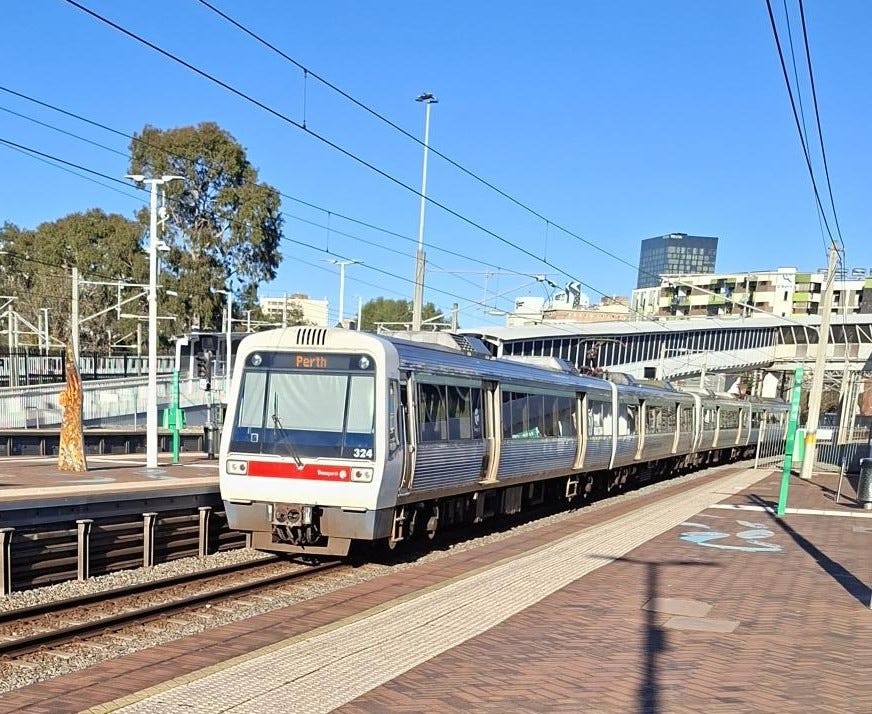
The trains of our thoughts chug along without needing very much input from us. Once we think one way about something, tracks get laid in our minds. We see someone who looks different to us on the street and immediately the little train in our minds says, ‘ooh, not like us, not like us, must be dodgy, must be dodgy, walk away, walk away’ (or something like that - I don’t know how your brain chats to you).
Could we instead try to steer that train of thought? ‘Yeah, that person is different, but they’re created just like me, they deserve my respect, and there’s no need to harbour negative thoughts about them, just because they don’t look like me.’
I realise there are many of you who have real-life people who set off the whistles and bells on your little thought trains. People who’ve harmed you. People who you’ve trusted, loved, and thought a lot about, and they’ve hurt you in ways you perhaps can’t articulate. These people are very real, and you should trust your instincts for these situations. I’m not talking about abusive situations here, I’m talking about generalisations, about casting aspersions, about painting strangers with the same brush, purely because they’re strangers.
In the Bible it talks about the battlefield of the mind, and Jesus tapped into that when he talked about not even thinking wrong thoughts about your brother - not just the fact that you haven’t killed him. Thoughts lead to actions.
Wouldn’t you rather our actions were those of kindness and compassion? Rather than hate and distrust? What a world we could live in if we followed those simple words.
Rather profound thoughts from a simple journey on the train this morning, but there you go.
Trying to breach the gaps between what we think about people, and therefore how we act towards them. Something to consider next time you’re out and about - and not just on a train.
Catch you next week,
Maggie
Beautiful words Maggie - I wish we could all act with kindness and compassion rather than hate and distrust. It would certainly solve a lot of problems!
Fantastic sentiments, Maggie. Another brave and insightful piece.